


Tankless Water Heater Installation in Riverside, CA: Is It Worth Switching From a Tank?


If your water heater is getting older or you're planning a home renovation, you may be wondering whether it's time to switch to a tankless water heater. You've probably heard that tankless systems can save energy, take up less space, and provide hot water on demand. But are they really worth the investment?
For many Riverside homeowners, the answer depends on their household's hot water usage, existing plumbing, and long-term plans for the property.
While tankless water heaters offer several advantages, they aren't necessarily the best choice for every home. Understanding the differences between traditional tank and tankless systems can help you make a more informed decision before replacing your equipment.
At First Place Plumbing Solutions, we provide professional tankless water heater installation in Riverside, CA, helping homeowners evaluate their options and choose systems that meet their needs. We also offer regular water heater repair and installation in Riverside as well.
How Does a Tankless Water Heater Work?
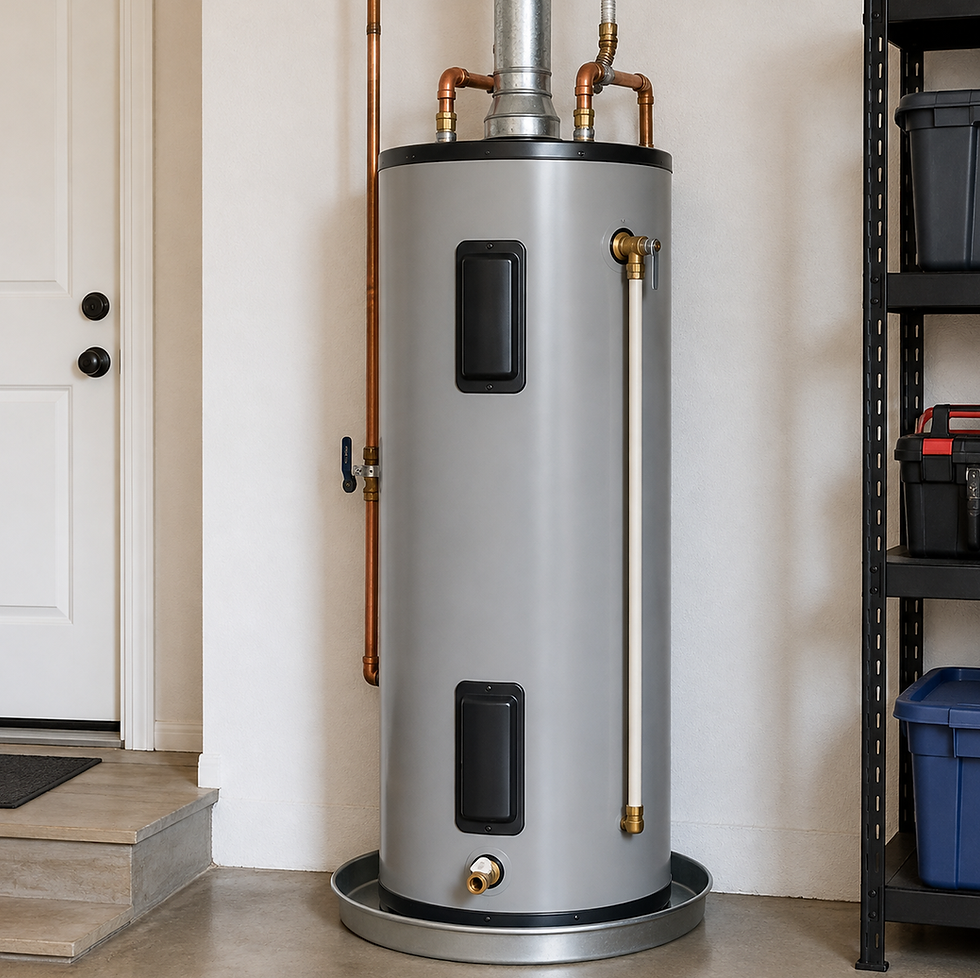
Traditional water heaters store a set amount of heated water in a large insulated tank. Once that stored hot water is used, the system needs time to heat more.
A tankless water heater operates differently.
Instead of storing hot water, it heats water as it flows through the equipment. When you turn on a hot water fixture, the system detects water flow and activates its heating components.
This means you're not limited to the amount of hot water stored in a tank.
However, tankless water heaters do have a maximum heating capacity. If several showers and appliances are running simultaneously, the system must be properly sized to handle that demand.
Understanding this distinction is important when deciding whether tankless equipment is right for your home.
1. Tankless Water Heaters Can Reduce Energy Waste
One of the biggest reasons homeowners consider tankless water heater installation is energy efficiency.
Traditional storage-tank water heaters maintain a supply of heated water throughout the day, even when nobody is using it. This can result in standby energy losses.
Tankless water heaters heat water only when there's demand, eliminating most of the standby losses associated with storing hot water.
According to the U.S. Department of Energy, homes that use 41 gallons or less of hot water daily may find demand-type water heaters approximately 24% to 34% more energy efficient than conventional storage-tank water heaters. For households using around 86 gallons daily, the efficiency improvement may be approximately 8% to 14%.
Actual savings depend on the equipment, fuel type, household usage, energy prices, and installation.
Will a Tankless Water Heater Lower My Utility Bills?
It may.
Because tankless systems don't continuously maintain a large volume of heated water, they can reduce energy consumption in suitable applications.
However, energy savings don't automatically mean the system will pay for itself quickly.
It's important to compare the initial installation cost with potential operating savings over the years you expect to own the equipment.
For homeowners planning to remain in their Riverside home long-term, that calculation may be particularly worthwhile.
2. Tankless Water Heaters Can Provide a Continuous Supply of Hot Water
Running out of hot water during a shower is a common frustration with traditional storage-tank systems.
A tank water heater has a limited amount of stored hot water. Once that supply is depleted, the system needs time to recover.
Tankless systems heat water as it's needed, allowing them to continue supplying hot water as long as demand stays within the equipment's capacity.
This can be beneficial for households with multiple family members who shower one after another.
Does That Mean Unlimited Hot Water?
Not exactly.
A tankless water heater can continue heating water for an extended period, but it can only produce a certain amount of hot water at one time.
For example, running two showers, a dishwasher, and a washing machine simultaneously may exceed the system's heating capacity.
If that happens, the water temperature may drop or the equipment may be unable to meet the full demand.
That's why professional sizing is one of the most important parts of a successful tankless water heater installation.
3. Tankless Water Heaters Take Up Less Space
Traditional water heaters typically require room for a large storage tank.
Tankless systems are considerably more compact, and many models can be mounted on a wall.
For Riverside homeowners with limited utility space, this can be an attractive advantage.
A tankless water heater may free up floor space in a garage, utility closet, or another approved installation area.
However, the equipment still needs appropriate clearances, utility connections, and access for maintenance.
A professional plumber can evaluate whether the proposed installation location is suitable.
4. Tankless Water Heaters May Last Longer Than Traditional Tanks
Water heater lifespan is another important consideration.
Conventional storage-tank water heaters commonly last approximately 8 to 12 years, although some last longer depending on maintenance, water conditions, and usage.
Tankless water heaters may have a service life of 20 years or more when properly installed and maintained.
That doesn't mean every tankless unit will last two decades, but their potential longevity can make them appealing to homeowners looking for a long-term investment.
Maintenance Still Matters
Tankless water heaters are not maintenance-free.
Mineral deposits can accumulate inside the heat exchanger, particularly in areas with harder water.
Routine maintenance, including descaling when recommended by the manufacturer, can help maintain performance and reduce avoidable equipment problems.
Homeowners should follow the manufacturer's maintenance recommendations for their specific system.
5. Tankless Water Heater Installation Usually Costs More Upfront
One of the biggest disadvantages of switching to tankless is the initial installation cost.
A traditional tank water heater can often be replaced with a similar model using much of the existing plumbing and utility configuration.
Converting to tankless may require additional work.
Depending on the property, installation considerations may include:
Upgrading or modifying gas supply piping
Evaluating electrical service and circuit requirements
Installing appropriate venting for gas-fired equipment
Relocating water supply connections
Installing condensate drainage where required
Providing suitable mounting space and service access
Removing the existing storage-tank water heater
Not every installation requires all of these modifications.
However, the difference between a straightforward tankless replacement and a complete tank-to-tankless conversion can significantly affect the project cost.
How Much Does Tankless Water Heater Installation Cost in Riverside, CA?
The cost varies based on the equipment selected and the work required.
A home with suitable existing utility connections may have a simpler installation than one requiring extensive gas, electrical, or plumbing modifications.
Other factors include the system's heating capacity, installation location, venting requirements, and whether additional plumbing improvements are needed.
At First Place Plumbing Solutions, we can evaluate your existing setup and explain the work involved before you decide whether to make the switch.
6. Your Home's Existing Plumbing Matters
Not every home is immediately ready for a tankless water heater.
Riverside has a mix of established neighborhoods, older homes, remodeled properties, and newer construction.
In older homes, the original plumbing and utility systems may not have been designed for modern tankless equipment.
For example, a gas-fired tankless water heater may require a higher gas input than the traditional tank model it replaces.
Likewise, some electric tankless systems have substantial electrical requirements that may exceed the capacity available at the installation location.
A plumber can help assess the plumbing and coordinate any necessary utility-related work with qualified professionals.
Is Tankless a Good Option During a Home Remodel?
A renovation can be an excellent time to evaluate your water heater.
If you're adding a bathroom, installing a larger shower, or changing the layout of your home, your hot water requirements may increase.
Planning the water heater installation alongside the renovation can help ensure the system is properly sized and the necessary connections are incorporated into the project.
7. Tankless Water Heaters Don't Always Deliver Hot Water Faster
A common misconception is that installing a tankless water heater means hot water will reach every faucet immediately.
That's not necessarily true.
Although the system heats water on demand, the heated water still needs to travel through the plumbing pipes to reach the fixture.
If your bathroom is far from the water heater, you may still experience a delay.
In some homes, a properly designed hot water recirculation system may help reduce waiting times, but compatibility and installation requirements vary.
It's important to understand what a tankless water heater can and cannot do before investing in one.
Tankless vs. Traditional Water Heaters: Side-by-Side Comparison
Both types of water heaters have advantages. The right choice depends on your household's needs and budget.
Feature | Tankless Water Heater | Traditional Tank Water Heater |
How it heats water | On demand | Stores heated water |
Upfront installation cost | Usually higher | Usually lower |
Energy efficiency | Reduced standby losses | Standby losses possible |
Hot water capacity | Limited by heating rate and flow | Limited by stored volume and recovery |
Equipment size | Compact | Requires tank space |
Expected lifespan | Often 20+ years | Commonly 8–12 years |
Maintenance | Periodic maintenance and possible descaling | Periodic maintenance, including tank-related checks |
Conversion requirements | May require utility and plumbing upgrades | Often simpler when replacing a similar unit |
The best water heater isn't necessarily the most expensive or technologically advanced option. It's the one that reliably meets your needs at a cost that makes sense for your property.
When Is Switching to a Tankless Water Heater Worth It?
A tankless water heater may be a good investment if:
You plan to stay in your home for many years. A longer ownership period gives you more time to benefit from potential energy savings and equipment longevity.
Your household frequently runs out of stored hot water. A properly sized tankless system may better accommodate back-to-back showers and extended hot water use.
You want to free up space. Wall-mounted equipment can be beneficial in properties where floor space is limited.
You're already planning plumbing renovations. Coordinating the installation with other work may make the conversion more practical.
You're replacing an aging water heater. If your current system is approaching the end of its service life, it's a good time to compare replacement options.
When Might a Traditional Tank Water Heater Be Better?
Tankless isn't always the most practical choice.
A traditional tank water heater may make more sense if:
Your primary concern is minimizing upfront cost.
Your current tank-style system meets your household's needs.
A tankless conversion would require extensive utility upgrades.
Your household has unusually high simultaneous hot water demand that would require a more complex tankless setup.
You prefer a straightforward replacement using existing connections.
There is no universal answer. The most important thing is choosing equipment suited to your home and usage.
Choosing the Right Size Tankless Water Heater
One of the biggest mistakes homeowners can make is selecting tankless equipment based solely on the number of bathrooms in the house.
Proper sizing also depends on how many fixtures may operate simultaneously and how much the incoming water must be heated.
Gallons Per Minute (GPM)
Tankless water heaters are commonly rated by their ability to heat a certain flow of water, measured in gallons per minute.
For example, a shower, bathroom sink, and kitchen faucet all contribute to the home's potential simultaneous hot water demand.
The more fixtures you expect to use at the same time, the greater the required heating capacity.
Temperature Rise
A tankless water heater must raise incoming water to the desired hot water temperature.
The difference between the incoming water temperature and the target temperature is called temperature rise.
A unit's available flow rate depends partly on how much temperature rise is required.
Why Professional Sizing Matters
An undersized system may struggle to maintain comfortable temperatures when multiple fixtures are operating.
An oversized system may cost more than necessary.
First Place Plumbing Solutions can help evaluate your household's hot water requirements and identify appropriate equipment options.
Tankless Water Heater Installation in Riverside, CA
Whether you're replacing an aging water heater or planning a home upgrade, choosing the right system involves more than comparing product features.
Your home's plumbing configuration, utility capacity, household size, and daily water usage all affect the decision.
At First Place Plumbing Solutions, we help Riverside homeowners evaluate tankless water heater installation options and understand what's involved in converting from a traditional tank system.
Our Riverside plumbing services are available throughout Riverside and surrounding Inland Empire communities, including Moreno Valley, Jurupa Valley, Corona, Norco, and nearby areas.
Frequently Asked Questions About Tankless Water Heaters
Is a tankless water heater worth the extra money?
It can be, especially if you plan to stay in your home long-term, want to reduce standby energy losses, or need a properly sized system for extended hot water use. However, installation costs and potential energy savings should be evaluated for your specific property.
Can I replace my existing water heater with a tankless model?
Many homes can be converted, but the installation may require changes to plumbing connections, gas supply, electrical capacity, or venting. A professional evaluation can determine what modifications are needed.
Do tankless water heaters work well for large families?
Yes, when properly sized. A tankless water heater can support extended hot water use, but it must have sufficient capacity to handle the household's simultaneous demand.
Do tankless water heaters increase home value?
A tankless water heater may appeal to some buyers because of its efficiency, compact size, and potential longevity. However, the effect on resale value varies and should not be assumed to equal the installation cost.
Do tankless water heaters need maintenance?
Yes. Depending on the equipment and water conditions, maintenance may include descaling, cleaning filters, and inspecting system components. Follow the manufacturer's recommended maintenance schedule.
Will a tankless water heater work during a power outage?
Most modern tankless systems require electricity for controls, sensors, and ignition, even when natural gas is used to heat the water. Without an appropriate backup power source, they generally won't operate during an outage.
How long does it take to install a tankless water heater?
The installation timeline depends on whether you're replacing an existing tankless unit or converting from a traditional storage-tank system. Projects requiring utility upgrades or extensive plumbing modifications generally take longer.
Thinking About Switching to Tankless? Contact First Place Plumbing Solutions
If your current water heater is getting older or you're tired of running out of hot water, a tankless system may be worth considering.
The right choice depends on your budget, your home's plumbing, and how much hot water your household needs.
First Place Plumbing Solutions provides tankless water heater installation in Riverside, CA, helping homeowners compare their options and plan appropriate upgrades.
Whether you're interested in replacing an aging tank or installing a tankless system during a renovation, our team can help you determine the next steps.
Contact First Place Plumbing Solutions today to discuss tankless water heater installation in Riverside and the surrounding Inland Empire.


Comments